Showing posts with label travel. Show all posts

Tuesday, March 27, 2012

Maximum Lima

It is often said that quantity is not quality, but if you can mesh the two terms together, the result can be memorable. Our first day in Lima was one of those “fill in every minute with experiences”-type days, and allowed us to totally immerse ourselves in the destination, which is exactly what we wanted to do.

Technically, aside from landing at Jorge Chavez International Airport at 6:30 am, we spent the day in the Lima suburbs of San Isidro, Miraflores and Barranco. After an all night flight from New York, with little sleep, we landed on time, went through passport control quickly, and despite our priority tagged luggage being the very last to be taken off the plane, we still left the terminal before 7:30 am. My colleague and I were attending the ASTA International Destination Expo and had arrived a few days early to get acclimatized. For me it was a welcome return to a city I had explored in 2003, but for my colleague it was a new adventure in South America. ASTA had arranged for a driver to pick us up and take us to the Westin Hotel, so even with the Sunday morning traffic, we were at the hotel and checked in by 8:30 am.

I will say that not all Westin hotels are created alike and that this is one of the best hotels I have every stayed at. The customer service is amazing, the concierge service is outstanding, the rooms --and even the decorations in the hallways--are warm, comfortable and inviting.

Historic homes in Barranco

Really the only negative of the day was when I went to open my suitcase—the lock was still on—but the slider—the part of the zipper that moves along the zipper chain, had been chopped off. Inside my suitcase was a note from U.S. Homeland Security explaining that they had randomly selected my suitcase for inspection and had every right to chop off the lock. Well, in effect my suitcase was totally ruined, but I would resolve that another day. Time was fleeting!

We changed our clothes and went downstairs where the concierge gave us a few orientation tips, and then the hotel put us in a car to take us to Miraflores. While only 15 minutes away, the hotel car costs $11.00 US. A street taxi costs 6 Peruvian soles (about $2.50 US). Everyone says to be very careful when hailing a street taxi as there are some ‘bad apples’ out there, but from this point on, we always hailed our own taxi never encountered any problems.
 
Spotting a café by Kennedy Park in Miraflores, we had breakfast with delicious coffee (in fact the coffee is great just about everywhere in Peru) and then walked the 30 minutes toward Larcomar, the seaside shopping complex that graces the cliffs of Miraflores. Below we could see surfers, kids playing football, and even some brave souls playing in the cold Pacific waters. Larcomar has many stores that you would see at a mall in Canada, with a few unique craft stores and restaurants, a video arcade and some fast food. After a quick look around, we wandered back downtown.

Sunday in Miraflores is quite relaxed (and very safe). There are art exhibits on the street and in the park. People are exercising in groups or doing tai-chi; walking their dogs, enjoying the flowers, attending the nearby church or chatting in the outdoor cafes. We headed over to the craft markets to browse the Inca-inspired textiles, chatchkas, masks, alpaca sweaters, ceramics, T-shirts, musical instruments and paintings. And then it was time to grab a taxi back to our hotel in San Isidro.

Once there we decided to break two of our own travel rules. 1) Try not to eat at the hotel (local food at a local restaurant is preferred) and 2) Only order room service in a hunger emergency. As we had only one hour before we would leave again, we ordered ceviche (raw fish marinated in citrus juices) and a club sandwich. The ceviche was fresh and delicious, the club sandwich was one of the best I have eaten anywhere.

The Bridge of Sighs and the Bar  Scene Barranco

While still in Canada, we had contacted Ronald Elward of Lima Walks regarding an afternoon tour of Barranco, and the message left in our room was that he would meet us in the lobby at 3:00 pm, So off we went again. We got a taxi to Barranco, which is a wonderful suburb just south of Miraflores known for its upscale, safe environment, colonial architecture, bars and nightlife in general. For two hours we wandered the streets, taking in the style and stories about the various houses and buildings. We learned that all the houses were built after the city recuperated from the great Lima earthquake of 1746. We wandered across the Bridge of Sighs (Puente de los Suspiros) where according to legend, anyone crossing the bridge for the first time while holding his/her breath will have their wish fulfilled, (I had already crossed it 9 years before so I was not holding out for any special favours) and then we ended the afternoon with cold beers at a café overlooking the ocean.

Ronald had recommended the restaurant at Huaca Pucllana for dinner, so we took a taxi back to Miraflores and sat outside the Huaca until it opened. A Huaca is a ‘sacred place’ and this particular pyramid dates back about 1000 years. The restaurant next door allows you to experience fine dining while enjoying beautiful views of the historic site. We were seated at an outdoor table. With excellent service, amazing food (I had the grilled tuna, my colleague had the duck), a relaxed, almost mystical atmosphere, this is now entered into my list of top restaurants around the world.

Finally at 9:00 pm we headed back to the Westin for the night. Quite an active day but if anything it emphasizes all the things you can do to fully immerse yourself into a city, taking in the culture, the food and the spirit of adventure on the first day of any trip. It was our wish to maximize our time in Lima and we were now off and running!

- Steve Gillick, President and COO, CITC

Thursday, March 15, 2012

Much More than Machu Picchu

‘Tis the season to be selling Peru, so it seems. The destination has done a great job in promoting itself and the upcoming ASTA International Destination Expo in Lima seems to be the right event at the right time. In researching my talk on Niche Markets for the IDE, I was pleasantly surprised to learn that there are about 75 more reasons to visit Peru than just exploring Machu Picchu.

To be clear, Machu Picchu is an extraordinary and overwhelming feast for the eyes and the imagination, and having spent a few days there in 2003 after hiking the Inca Trail I can say that the history, mystery and spiritualism of the sacred valley is something very special. In travel we talk about ‘serendipity’, which is supposed to refer to chance happenings, where you don’t expect something to occur. But at Machu Picchu, you already know about the site, yet the more you delve into the sacred secrets, the power of the Inca architecture, the intensity of the condor and mountain inspired rituals, the more each page of your guidebook turns into a serendipitous revelation.
Machu Picchu
But there is much more in Peru. A niche market is a subset of travel—reflecting a unique client interest that responds to a need. And we all have them. Photography is a niche, as is history, culture, shopping, food and drink. But then each category can be divided into more niches. A photographer may classify their own works of art as landscape/scenery or people/culture or wildlife and more. A culinary traveler may look for markets and then restaurants, followed by cooking schools, wineries, and unique local tastes such as pisco or ceviche (or even guinea pig).

Other unique niches include dark tourism (the Museum of the Inquisition), jewellery (the Gold Museum), adventure, both soft and hard, which can take in everything from trekking mountains to llama trekking to alpaca farming, and from paragliding to hot air ballooning; from scuba diving and ship wrecks to surfing, fishing (salt water, fresh water, deep sea) and cruising. And then there are the sustainability travellers, looking for more eco-friendly experiences in the Amazon or through voluntourism or live-like-a-local programs that emphasize learning Spanish or sharing thoughts and ideals with people who have an absolutely different life style than your own.

As travellers of all ages feel that travel itself is an experience that is owed to them, and each generation of traveler re-interprets how they like to travel (education, groups, FITs, physical activity or physical interaction with the land, people based travel and on and on) the importance of qualifying clients as to their needs—but also in being able to accommodate those needs-- falls into the exclusive realm of real-live-trained-travel-professional skills. Next time a client expresses interest in a destination known for a solo attraction, probe a bit deeper, research a bit more and you can come up with an amazing program of satisfaction and smiles.

-Steve Gillick, President and COO, CITC


Thursday, January 12, 2012

Sunday in Havana with Steve

Our third trip to Cuba was an opportunity to do exactly what we wanted to do, on our own time. As most of the charters fly directory to the resorts, we chose a Sunwing flight into Varadaro Airport and then we made our way to the Iberostar Parque Central in Havana. The 2 ½ hour bus trip was broken up with a short break at a highway rest stop in Jibacoa where you can enjoy one of the creamiest Pina Colada’s you will get anywhere in the country. It just sets you in the right holiday ‘let’s start to relax’ mood!

The Iberostar is in a great location, down the street from the historic Hotel Inglaterra and the Capitol Building, and literally right around the corner from the Palacio de Bellas Artes and Obispo Street --which is the main pedestrian thoroughfare the runs from the El Floridita Bar (Hemingway’s famous Daquiri hangout) to the Plaza d’Armas.

Our first few days were spent wandering the back streets, taking photos, re-acquainting ourselves with the Brewery Restaurant in Plaza Vieja, where the outdoor seating, the live Cuban music, the crowds and the friendly waiters add up to a great experience in the Havana sunshine. 
 

Music in Plaza Vieja
But Sunday was the day we had set aside and actually made plans and, with a touch of serendipity here and there (it’s amazing what two finger puppets can get you), it turned out to be a very enjoyable day. We walked down Obispo Street and one of the few shops open at 9:00 am was a book store/poster shop. Many stores showcase posters of the 53rd anniversary of the Cuban Revolution featuring a picture of the aging Fidel Castro, but no one seemed to want to give one away or even sell a poster. This bookstore had a large selection of posters for collectors, some dating back to the 1960’s and sure enough, they had a 53rd Anniversary poster. As a student of history I bought one and while I’m still not quite sure where to display it, the poster is at least now part of the Gillick Archives!

Continuing on Obispo, we stopped at the bakery by the hotel Ambus Mundos (another Hemingway hangout) for some treats, and then headed to the Malecon for the 45 minute walk to Callejon de Hamel.

 Colourful Murals in Callejon de Hamel

The Malecon refers to the sidewalk/seawall/roadway that stretches along the coast of Havana. On this day the waters were rough and crashed against the wall as well as onto the sidewalk in various places—but allowed for a lot of dramatic photos. Many of the crumbling buildings we saw a few years ago along the Malecon have been torn down with some more modern apartments and hotels taking their place, but it is still a fairly quiet deserted area, especially on a Sunday morning. We passed lots of fisherman standing by or sitting on the seawall as we walked in the direction of the Hotel Nacional off in the distance.
  But the plan was to take a left turn before the Nacional to find Callejon de Hamel. We had been there before, but had read that on Sunday’s there was music and rumba dancing. The alley (callejon) is relatively short but full of colours and artistic interpretations of the Afro-Caribbean religion, Santeria. Salvador Gonzalez Escalona, the Camaguey-born artist painted many of the colourful murals in the 1990s, but there are also street sculptures, bathtubs featuring scenes from Saint Exupery’s Le Petite Prince. Art galleries, refreshment stands and a very small centre stage area.

Finger Puppet Bliss

The crowd started to gather by around 11:30 am and we tried to secure a good spot for taking photos. There were some children in the area so naturally we brought out the finger puppet toys to the delight of both the kids and their parents. One boy was so thrilled that we gave him second puppet and that led to an invitation to sit inside the chained off tourist area to have a front row seat for the festivities.

At exactly 12:00 noon, the crowd was greeted in English and Spanish (“...and welcome to our frennemies from the United States…ha ha ha “). Then the drummers started, the singers joined in, and for the next hour the rhythms, the dancing, the music, the interaction between the performers, the smiles, the intensity and the devotion to tradition, all took over to mesmerize and involve everyone in the celebration of the Santeria culture and religion.  
 
Celebrating Santeria
 With photos galore and even a few new friends, we walked back to downtown Havana through side streets, past the 1950’s cars for which Havana is famous, past brightly coloured and sadly dilapidated buildings, and through parts of the city where tourists don’t normally stroll. But in Havana there are salutations from people everywhere, and safety was never a concern.

We finished the day with a visit to the book stalls by Plaza D’Armas, a peak at the outdoor art market and craft market near in Central Park and then a snack of dark beer and tiny fried fish back in Plaza Vieja.
We left Havana the next day to explore other areas of the island. Due to our own time limitations, we could not return to Santiago or Trinidad this time, but were happy to have spent time in Havana. It is such a unique city and for those looking for a combination of history, culture, exploration and photography, then this is a must for any Cuba itinerary.

-Steve Gillick, President and COO, CITC


Wednesday, December 14, 2011

Just say Noh!

Nightlife in Yokohama

At the recent Japan Travel Mart held in Yokohama, we had the opportunity to sample a variety of evening activities that were impressive, tasty, fascinating, educational, energetic, and just plain fun!

The first night was an introduction to Yokohama where we could sign up for either an evening of food and hands-on creativity at the Cup of Noodle factory, or take the Izakaya bar cruising option. I happen to love Izakaya culture which involves traditional small, usually family-owned bars, that serve tasty snacks or meals, along with one’s beverage of choice: beer, sake or shochu.

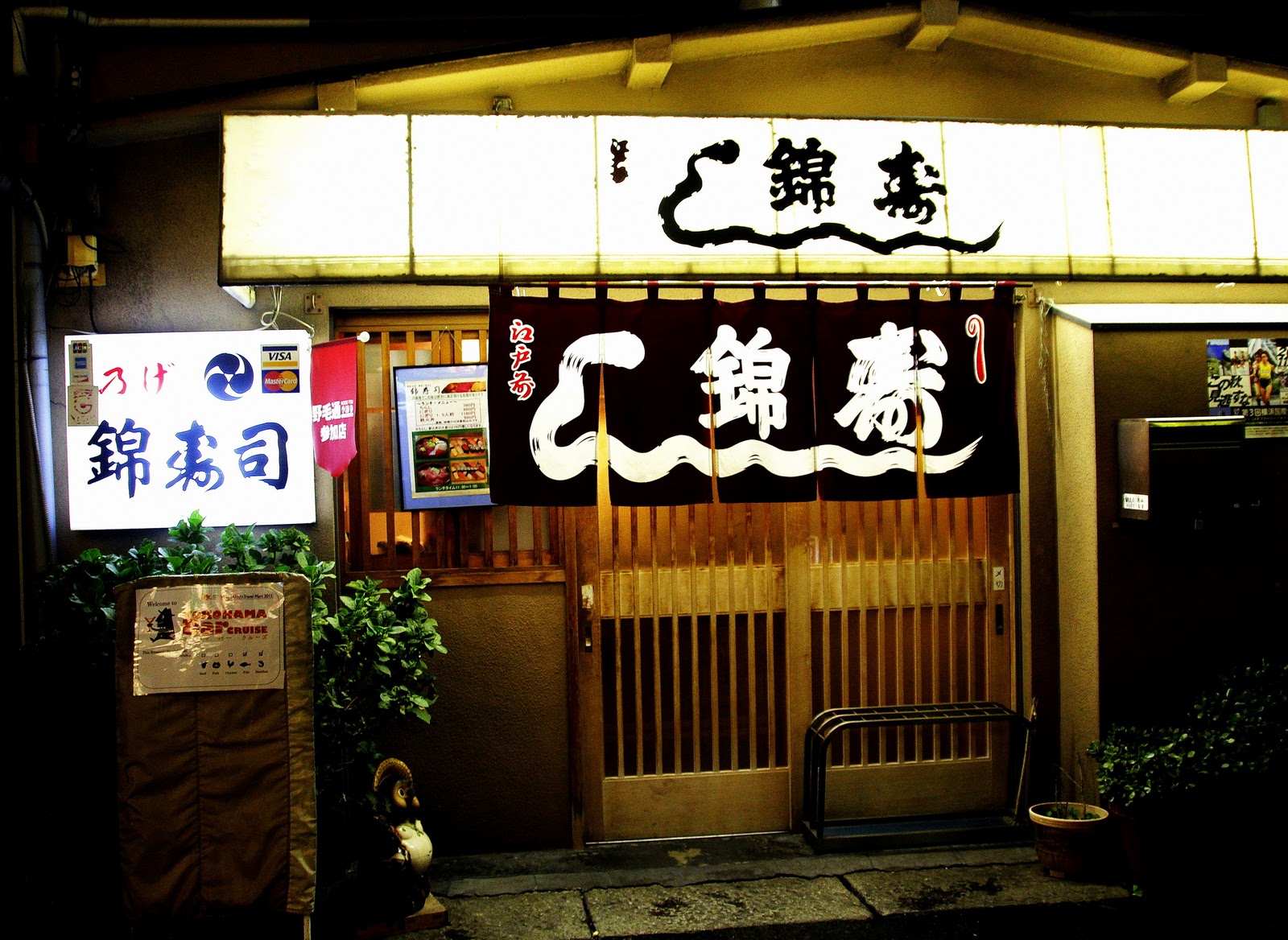
Nogeh Street is the main thoroughfare in an area filled with literally hundreds of Izakayas, restaurants, standing sake bars and regular bars and extends down the numerous side streets. The deal was that we could choose two restaurants from a list and enjoy some tasty treats and a drink. We immediately dashed to our first choice, Nishiki Sushi, where there happened to be two seats left amongst the fifteen or so, available. We ordered Sapporo Beer and a sushi platter and fell into one of those melt-in-your-mouth sushi trances that one can only experience in Japan. Ahhh… if only Toronto sushi could taste even half as good as this! But the place was under attack by all the other Travel Mart attendees now (literally) chomping at the bit to get into the Izakaya, so we finished up and headed off for our second treat of the evening.
 
Nishiki Sushi
Yasu Bei is a very small Izakaya specializing in Yakitori, which are small bamboo skewers of grilled marinated meat and they are soooo delicious. In fact, once our set dinner was finished, we stayed in the restaurant for some time, trying different dishes, sampling the sake and chatting with other Travel Mart-ers. Thoughts of good food as well as finding time during the conference to return to the area to try out more Izakayas, turned the 20 minute walk back to the Intercontinental Hotel a very quick jaunt.

But more lay in store. The official Opening Night of Travel Mart took place at the Noh Theatre. Having attended a Kubuki performance a few years ago, I was looking forward to learning about Noh. When we arrived at the theatre. the performers were already in engaged in short skits in the entrance hall, to give the audience some insight into the masks, the intricately crafted costumers and character development. Noh, which grew up in the 14th century as a combination of Chinese art and Japanese dance, and originated at the same time as the tea ceremony—which we were invited to attend in another part of the theatre. Delicious powdered green tea was carefully prepared and then served in bowls, one at a time, with kneeling, bows, respect and care.

We were then invited to see a sampling of 5 plays in the actual theatre. The stage is quite simple and features a painting of a pine tree on the back wall, which some believe reflects the fact that originally Noh theatre was performed out of doors. Unlike Kabuki where men perform as both male and female characters, in Noh, men and women both perform. Some of the short plays silent, sad and thought provoking, one was loud, boisterous and the actions and speech of the actor were hilariously funny (and we did not need to speak Japanese to appreciate this) and other plays were creative, dramatic and gripping. On the whole it was a fascinating evening. Today, Noh theatre is making a comeback with young people. The traditional day-long plays are condensed at times and fit into an evening that might consist of two plays. For many seeking a night out, Noh is the way to go!
 
Taiko Drummers

Our last evening took place in the Pacifico Yokohama Convention Centre and featured the Taiko Drummers. The combination of tympanic energy and rhythm and the determined facial expressions of the young performers was electrifying.

And then, following a dinner buffet, a huge tuna fish, caught off the coast of New York State, was transformed before everyone’s flashing cameras, into the tastiest sashimi for the 300 Travel Mart attendees to sample.

Tokyo often gets the attention when people consider a trip to Japan, but there is absolute joy in discovering the secrets that other towns and cities hold, and Yokohama is no exception. The food, the drinks, the atmosphere, the entertainment all made for a great time, and of course, for that more eclectic experience….remember that all you need to say is Noh!

-Steve Gillick, President and COO, CITC


Tuesday, October 11, 2011

Habarana Highlights!

Having just returned from the ATOURZ/CITC/Sri Lankan Airlines Fam trip to Sri Lanka, I find that the experience of being there again (I first visited in 2005) is still a strong, pleasant memory of smiling people, culture, history, tastes, smells , sights and discovery. While every one of the seven days in the country was packed with experiences and activities, the two days in Habarana were possibly the most impressive.

Habarana lies in the centre of Sri Lanka’s cultural triangle where a number of fascinating attractions can be reached by car, usually within an hour, including Anuradhapura, Polonnaruwa, Sigiriya, Dambulla and Minneriya National Park. While we did not see Anuradhapura on this trip, we explored the other sites—each being an adventure unto itself.

First off, I should note that we were based at the Cinnamon Lodge in Habarana for two nights, with each of the Fam participants (or pairs) having their own ½ bungalow to themselves on a large treed property, bordering a river with monkey troops patrolling the treetops, a variety of birds visiting the mangrove-like trees off shore, and the occasional mongoose poking around the dining hall in search of scraps.. It was like living in a park—with your own house! And we had the opportunity to check out the nearby and uniquely architecturally-designed Heritance Kandalama hotel with its distant views of Kandy and Sigiriya, as well as the Vil Uyana Villas, where one can actually walk to Sigiriya from your luxury private accommodation in about an hour.


Polonnaruwa is a UNESCO World Heritage Site that includes reservoirs, temples, the Royal Palace complex, a huge Dagoba (Stupa) and sacred rock carvings of the Buddha. Polonnaruwa was a major city in the 10th to 12th centuries and is a great place to explore and appreciate history. A travel tip: When you are asked to remove your shoes before entering the temples, consider the 95 F weather and keep your socks on. The alternative is burned feet on the hot stone surfaces!

Sigiriya is another UNESCO Heritage Site that features water gardens, frescoes, a mirror wall and then the huge carved paws of the lion which presumably formed the basis of a lion’s head carved in the rock. The ascent to the top of the rock was through the paws and into a passageway in the lion’s mouth. This is a walker/hikers paradise based on the 1000 + stairs required to ascend to the top platform. The unique, natural rock formations in the park are impressive, before you climb the winding staircase to view the frescoes, and then descend another winding staircase before starting to climb up, up, up. The story of Sigiriya comes in different versions but involves murder, deception and sibling rivalry…ahhhh the stuff that makes for great drama!

Dambulla Caves

Dambulla, yet another UNESCO Heritage Site is a bit of an uphill climb, even if the bus parks in the upper parking lot but the caves are worth the huffing and puffing. Five caves are filled with over 150 images of the Buddha as well as some kings of days gone by. Strolling through and reflecting on the peaceful gaze of the Buddha’s can be a soul-soothing exercise, especially if you can wait out the bus groups and try to be alone, in silence and comtemplation.

Minneriya National Park is something you don’t expect in Sri Lanka. Most groups (including our own) spent time visiting the elephant orphanage in Pinnawela, but at Minneriya you board jeeps and head out to see wild elephants doing what wild elephants do in their family groups. Whether it is a fascination with two-week babies sleeping under the protection of their mother and aunts, or watching youngsters playing like kids in the water, or simply listening to the chomping of grass and gazing at eagles soaring in the sky or listening to the cries of the peacocks, this is a wonderful place for nature lovers.

And there is more in Habarana. There are some nearby spice gardens where you can tour and learn about ayurvedic medicinal plants, and even a Primate Research camp where you can learn about the indigenous monkeys and how to differentiate between the grey Hanuman Langur from the Toque Macaque. (Either way don’t get too close or you will lose your glasses or hat or camera)

Tea pickers
And again, Habarana is only one ‘area’ of Sri Lanka. On our Fam we spent time in Colombo and Kandy and Bentota Beach, each of which was a feast for curiosity and an opportunity for conversations with Sri Lankans to learn about their lifestyle and share experiences. In fact everywhere we went we heard the Sinhalese greeting of “Ayubowan”—that translates as ‘May you live longer and be healthy’. Time to add Sri Lanka to that long list of ‘must-sees”.

-Steve Gillick, President and COO, CITC


Wednesday, August 10, 2011

YOU SAY GREEN…I SEE RED

My Rant for August
Steve Gillick CTM

As a relatively frequent traveller, in and out of Canada, I stay at a number of different hotels both private and mainstream. While the promotion of Green practices has certainly been stepped up over the years, the actual practice seems to be diminishing. Now that everyone has ‘done their bit’ and registered on various ‘we are green—we support the environment” web sites and directories, it seems that they have fallen into a green comfort zone. Green for most hotels (despite pop-up displays and ads throughout the lobby) has been relegated to that simple announcement on a printed card in your hotel room advising that if you would like to be environmentally friendly and re-use your towel, then hang in on the towel bar after use; that if you require new towels, then leave them on the floor.

Is there an issue here? Well first off, it does seem a bit disingenuous. While re-using a towel may in fact save energy and soap and somehow impact the environment, it also saves the company itself money—which I suspect is the true motivation. Why do I say this? Because, my second point is that in many hotels, it matters not where you leave the wet towels—the cleaning staff change them anyway—and sometimes up to three times a day, depending on the star-rating of the hotel!

Anything else? Well now that you mention it, you see all the “we are Green” “We support the environment” “We epitomize sustainability” ads and then you see that this is a lot of talk (printed of course—how environmentally friendly is that?). Sustainability, for instance, includes working with local communities and hiring and training local staff. Yet the general manager of the hotel is from Berlin, the Sales Manager is from Cincinnati and the Chef is from Hong Kong. The locals are present, but mainly as bell boys, cleaning staff and in pool and restaurant service roles. Where are the trainees? Where are the locals who have been promoted to higher positions?

Once you pass through the lobby and enter your hotel room, you see papers and cards throughout. Single pages, each advertising a hotel program or a special festive meal crowded together on the desktop. You find a card talking about green practices by the telephone, another on the night stand, and a third in the washroom. And then…the ultimate test…you fling back the shower curtains and are greeted by tiny non-refillable plastic bottles filled with shampoo, conditioner, moisturizing cream and shower gel. Not terribly environmental. And to add insult to injury, there is no consideration for those who have scent –sensitivities (thank goodness I am not too affected by this) as each bottle competes with the next to include name brand products with, sometimes, the most oppressive ‘fresh’ smells. No wonder everyone in the hotel smells of apricots, avocadoes or ginger and lemons!

In some hotels, including 5 stars, despite the fact the room is on the non-smoking floor, the staff spray the room with cheap 2-star motel-smelling spray (why, I will never know) which again is offensive to those with scent allergies but also negates the effect of staying in a non-smoking and presumably fresh-smelling room.

And on and on it goes. So I guess the message is for those hotels that identify with what I have written to either walk the walk or stop talking nonsense when they say are Green.

Oh, do you complain, you ask? Yes, I fill out those comment cards and include my email contact information, but I have yet to hear back from any properties. I guess they are trying to be green and not waste space on the world wide web


Tuesday, July 12, 2011

The Squeaky Wheel gets the ….Sake?

I was brought up with the good counsel of my mom that “the squeaky wheel gets the oil”. This can be taken in two ways:

1) the person who acts inappropriately will be singled out and may pay the consequences for their actions

2) the person who takes the initiative to act or speak out, will be the one who reaps the rewards of their actions.

For travellers who are after all, guests in another destination, the lesson in #1 is obvious (I hope). As far as taking positive initiative goes (#2) it is something that can result in a memorable people experience, a unique souvenir, an upgrade in accommodation or transportation, and lots of stories to tell your friends who will inevitably ask “you really did that”?

A few real-life travel examples will demonstrate what I mean.

A) In the town of Takayama I saw a beautiful poster on the wall of a local restaurant. It featured an Ema—a drawing of a horse which is traditionally posted at the entrance of a home to invite happiness and good luck. I noticed that there were in fact two posters and having been through most of the shops in town, I knew that this was a unique poster. 

Sake Brewery - a poster with
 the local sake’s advertised

I asked my Japanese friend to ask if I could have one of the posters. He looked at me like I was out of my mind. I suggested that he mention that I was from Canada and that they had a duplicate poster on the wall, and that I would love to have this one in my office. So he asked. The owner said that unfortunately she could not take down the poster. We finished our meal, paid our bill, smiled and she once again apologized.

A few minutes later, we heard a lot of yelling and turned around. The entire staff of the family restaurant stood outside holding the poster and beckoning for us to return and claim it. We did followed by several minutes of shaking hands. Laughter, and thank you’s and smiles. The poster graces a wall in my home to this day, and it brings back wonderful warm memories of Takayama. All we had to do was ask.

B) In the town of Takamatsu, we had a wonderful dinner in a local Izakaya (a restaurant/bar known for the variety of dishes they serve). The small plates they gave us for our soy sauce were decorated with scenes of a traditional turn of the century sake brewery, and were really attractive. So, through my friendly interpreter, I asked if the Izakaya had any plates for sale.

The owner called over the manager who explained that these plates were no longer produced and therefore she could not sell or give us even two of them. So be it. When we went to the cash register to pay our bill later in the evening, the manager proudly handed me a small package –two dishes wrapped carefully in tissue paper. She apologized that they were used (as opposed to new) but she wanted us to have them. The result: Smiles, laughter, hand shakes and excited farewell greetings in both Japanese and English.

C) On two occasions, we booked package tours (Flight and hotel) to visit Hiroshima, on one trip and Kochi, on another. The routine is to present a voucher on arrival at the assigned hotel and you are provided with the standard tour group type room.

On both occasions, after looking at the assigned room, we decided that it was sufficient, but…. And on both occasions I was told, “But it’s a package tour rate, Steve. You can’t ask for an upgrade”. And that’s all I needed to egg me on. On both occasions, without even mentioning my travel credentials, I returned to the room after visiting the front desk and speaking with the hotel manager, to advise that our new executive suite was waiting for us. All we had to do was ask politely, ask the right person and of course exercise patience while the room allocations were checked.

D) And lastly there was that memorable time in the small town of Otani in Shikoku. We read that there was a sake brewery and that they offering sampling from time to time in the off -season. We arrived just after noon and were asked to return at 1:00 pm. When we did return, they asked if we had made an appointment to sample the sake. We had not. They said it didn’t matter and then went out of the office to find some sake for us to sample! Eventually the woman we had chatted with came back with four unopened bottles and two glasses. She opened them one at a time, giving us a taste of the contents and giving us a bit of an explanation of the characteristics of that bottle.

Sake Sampling—delicious, pure sake!

After the fourth sample she asked if we wanted to re-sample any of the sakes. We chose the first bottle. Then she asked if we wanted to just drink any of the sakes. Again, we really liked the first one so we chose it. Then she asked if we wanted to buy any of the sakes. We chose the first and second bottles. And then, as she put two unopened bottles in a shopping bag, she said that we should take all four of the sampling bottles with us too, as there were no other samplings scheduled! So we paid about $20.00 for two bottles, and left with another $50.00 in free sake. Friendship, laughter, photos, smiles and handshakes. A good memory for the brewery staff and a great one for us.

Whether the culture of a country tolerates outspoken behaviour or whether it is frowned upon, travellers can ask for a favour as long as they do so in the appropriate circumstance, the appropriate manner and with a personable, humble and respectful attitude. You will be amazed what kind of travel memories you can generate and what kind of friendship and goodwill you can cultivate. In the context of Japan, I guess the expression is “The Squeaky Wheel gets the Sake!

-Steve Gillick, President and COO, CITC

Wednesday, June 15, 2011

Fair Weather Travellers

The expression “fair weather friends” refers to those of your acquaintances who are there for you as long as everything is going well (i.e. the weather if fair) But as soon as you start having problems and wish to discuss them with your friends (i.e. stormy conditions are on the horizon), then these people are nowhere to be seen.

Hmmm...sounds familiar from a travel point of view.

There are a lot of travellers who are convinced that a sun-shiny warm vacation is expected all the time and anything that deviates from this is, you guessed it, the fault of their travel agent. But we know that old expression: “Climate is what you expect…weather is what you get” which means that just because it is the dry season in Chile, you will experience some rain and just because it is the rainy season in Laos, there may not be a lot of rain during your vacation.

I think back to a classic learning experience on one of my long ago visits to Thailand. A friend sent me a letter (this was the pre-email era) to tell me that it was raining and cold in Bangkok and I should dress appropriately. When I arrived I was humorously surprised. The “rain” amounted to an afternoon shower—almost exactly at 3:00 pm every day—that lasted for possibly 10 minutes before the sun shone again. The “cold” was cold for Bangkok. Instead of the microwave-searing heat everyday, the temperatures had indeed dipped down to a low-humidity 80 F and this was, relatively speaking, colder than it had been in a long time. So I never did wear that sweater I brought or the ‘gale-force wind-tested’ raincoat that I stuffed into my luggage at the last minute.


A rainy day in Borneo provides unique photo opportunities
Is it so bad that sometimes when you travel, raindrops keep falling on your head? Hey, I thought you were adventurous and were looking for a unique travel experience? Arrive with the proper gear, or in the least, borrow an umbrella from the hotel. In Japan and Korea and I’m sure many other countries, every corner store has umbrellas for sale for as little as $5.00, so you don’t even have to lug them home with you if you prefer not to. And once you dress appropriately, get out there and explore!

A ‘real’ destination discovery takes in the full gamut of experiences that the locals live with daily. This means rain and sun (and snow and storms and monsoons etc). Are you really getting a ‘genuine’ experience if you just experience the ideal weather? Or are you falling into your North American this-is-how-I-like it frame of mind and imposing your home country, comfort values, improperly, on the country you are visiting?

Not all of us enjoy the luxury of travelling when we want, but we still want to travel, and travel for many is a self-re-energizing exercise where you can escape from your daily routine and expand your senses by taking in new sights and sounds and learning about people and places. So don’t sweat it if you happen to experience inclement weather.

To be clear, we are not talking about that long-sought beach vacation where the sunshine IS the vacation. In those cases, many tour operators are getting hip to the needs of North Americans and coming up with innovative guarantees for sunshine (similar to ski resorts that guarantee snow). What we are talking about are all the other types of destinations where you planned on walking or hiking or shopping or visiting a market, or taking in a world famous attraction. It will still be there, whether it rains or snows (and your unique photos of your vacation will testify to your determination to make the most of your visit) so see it when you can, throw caution to the wind, and just do it (sorry Nike).

The soomers, boomers, zoomers and millennials put the experience of travel over all else. They need to travel. As a travel professional who has, no doubt, seen it all, don’t let the weather dampen your client’s enthusiasm. Ultimately it is their decision to go or not, but it is with your guidance that they can get acquainted with the ‘pros’ of travelling when the weather may not be ideal. Your clients will fare well whether the weather is fair or not.

-Steve Gillick, CTM, President and COO, CITC


Wednesday, March 9, 2011

Hellbent for Adventure?


Dramatic place names are attractive to travellers, especially to those looking for status and the prestige of saying “I visited ____ on my last trip”. And there is no shortage. Just a quick Google reveals such places as Heavens Door (UK), Hell (Cayman Islands), Hell (Michigan), Hell (Norway), Hell (Texas), Hell for Sertain (Kentucky) Hells Gate (New York), Hellhole Canyon (California) and of course there is Intercourse (Pennsylvania), Crotch Lake (Ontario) and Blow Me Down (Newfoundland).

But I actually did spend some time in Hell’s Valley in Japan, locally known as Jigokudani. This is the place where you can see the snow monkeys bathing in hot springs. It is slightly off the beaten track but the photographic rewards are well worth the effort. From Tokyo you can take a train to Nagano and then a second train to Yudanaka. Then a local bus can take you to the Kanbayashi Onsen stop where a sign points to a path and you walk though a forested area for about 30 minutes before arriving in Jigokudani.

We stayed at the Korakukan Ryokan, a traditional guest house located very close to the entrance of the Monkey Park. Rooms have the traditional tatami mats on the floor and your bed consists of a thick duvet and blankets laid out on the floor, like your own personal cocoon. After a day of touring you can soak in either the indoor or outdoor hot spring (onsen) and then, wearing your slippers and Yukata ( kimono), both supplied by the guest house, you come down to a delicious multi-course dinner of miso soup, pickled vegetables, fish, tofu and rice. As some of the Japanese guests spoke English, we had a great chat with them and shared small bottles of sake during the dinner. The cost including meals was about $90.00 per person.

Jigokudani or Hell’s Valley, is named after the many hot springs and boiling water that oozes and steams out of the crevices in the ground. The main attraction is the of snow monkeys (Japanese Macaques) who, during the winter months, come down from the mountains where they have been foraging for food, and immerse themselves into the hot springs inside the park.

You can see monkeys of all ages and sizes enjoying the hot steaming waters; sitting, playing, and seemingly meditating while tolerating the click of cameras from the tourists. All this takes place under the watchful eye of a park warden. Fortunately during out stay, there were only about 10 other tourists and after the mandatory close-up shots of peaceful monkey faces, most of the visitors put down the cameras and just shared in the tranquility, uniqueness and privilege of eye-witnessing this famous nature spectacle.

Once you head back for the evening (the park closes at 3:00 or 4:00 pm) and you take an outdoor hot bath at the Ryokan, it is not unusual to find more monkeys either scampering out of the bath when they see you approaching or, in some cases, the monkeys stay put and you can share your soaking experience with a simian relative!

We checked out of the Ryokan the next morning after breakfast, walked the 30 minute path and caught the bus and train back to Nagano. All in all, this was an amazing experience. One of those times where you say to yourself “There are 6 billion people in the world, and here I am with 10 others, sharing an incredible travel-experience-bond”.

If you are hell-bent on a having a great adventure, you might consider including Jigokudani on your next trip to Japan.

-Steve Gillick, President and COO, CITC


Tuesday, February 8, 2011

Memories of the International Sahara Festival, re-ignited!

I see Zine Abidine ben Ali every day! Well let me explain. In December 2002 I attended the International Sahara Festival in Douz, Tunisia. Afterward, I visited the local tourist office and they were giving away posters of the event. Headlined across the top was the name of the Tunisian President, Zine Abidine ben Ali. Underneath was a graphic of a camel with palm trees, along with mention of the Festival Highlights, including the dromedary (one-humped camel) race. When I returned to Canada, I had the poster framed and to this day it graces one of the rooms in my home. It was not until the recent turmoil in Tunisia, resulting in the downfall of the President, that I started to reflect on what an incredible time I had at the Festival and how, literally, every day for the past 10 years, the name Zine Abidine ben Ali has appeared before my eyes.

I was on an adventure tour to Tunisia and am still not sure whether our guide planned our visit to Douz in conjunction with the Festival or whether it was just one of those serendipitous happenings.

On December 20, 2002 we were heading to Zaafrane, about 12 km south of Douz to start our three day Camel Safari. We stopped for lunch in Douz and afterward, wandered the town, only to stumble upon the crowds heading to the stadium. This was the pre-digital memory card days of photography, so I had my 25 roles of film with me, 36 exposures per film. On that first day I shot 2 rolls within the first 30 minutes.

Hundreds of brightly dressed men and women, representing all the peoples of North Africa had descended on the small town of Douz. They had set up their living tents in an area in the centre of the stadium’s race track, and the locals were grabbing seats in the stadium to watch the events. My photo-common-sense told me that ‘the place to be’ was with the Festival participants, and not sitting in the stands with the spectators, so we walked to the far-end of the race track, crossed to the inside area—and wandered back to talk and photograph the contestants. No words can describe the cacophony of sound, the bright colours, the musicians, the decorated camels, the ululating cheers of the women, the smiles and laughter of the kids. As it was opening day and we had to leave before the events started we were a bit disappointed but our guide promised a return visit on the last day of the festival, after our camel adventure.

On December 23rd, dusty, stiff and sore from our camel safari, I bid Hogar my camel a farewell and then we drove back to Douz. The crowds in the town had quadrupled and when we arrived at the stadium, it was jam packed. Our problem was that we knew the best place to see the action—across the track in the inner circle. So the group, consisting of 12 people, started to cross the track as we had done a few days before. But this time a few policemen rushed over and told us, in French, that this was forbidden, and we had to stay in the stadium with the other spectators. Desperate to take more photos of this life-time opportunity, I called over a policeman and in my perfect Ontario high school French, I showed him the Canadian Flag baggage tag on my daypack, and explained that I was with the press and here in Douz, to take photos for Canadians. Without hesitation, the policeman said it was ok for me to go to the inside area. I then stood in the middle of the track (the races had not started yet) and like a traffic cop, I waved the other 11 members of the group across. They could not believe their luck, and I could not believe what I had done, but it worked, and 5 rolls of film later, I documented one of the most exciting festivals I have very attended. (to be honest while I did stretch the truth about being with the press, I did do several industry presentations about Tunisia and the Festival…so I did in fact show photos to Canadians)

Again, once in the tent area, we chatted with the men and their families, played games with the kids, and arranged for a Toureg horseman to ‘kidnap’ one of our group who really wanted to ride a horse. We watched the greyhound dog races, horse races, and camel races. We were right there …next to the procession of musicians from about 6 different countries. We saw the camel decoration competition where the women rode on top of the camel, secured from view inside a saddle hut. And we saw the magnificent Mehari –the pure white racing camels that stand out like white giants in the crowd of brown camels.

At the end of the day, practicing our camel commands (Ugid—which means ‘stop doing that” which comes in handy when you are trying to photograph a camel and he/she tried to eat your hat or camera), we took our last photos, bade our new friends goodbye and departed for Tozeur, our next stop in the Tunisian south.

And to think that all these memories were re-ignited when Zine Abidine ben Ali was ousted from power a few weeks ago. The poster will stay on my wall. Now it’s part of Tunisian history and my personal history as well.

-Steve Gillick, President and COO, CITC

Friday, December 3, 2010

Cotton Castle Caught in Calamity

In 1990 I had the opportunity to spend three weeks in Turkey, travelling from Istanbul in the west to Diyarbakir in the East and down to Bodrum in the South.  Through all this one of the more impressive sites was the blue hot water spring terraces of Pamukkale (pronounced Pa-moo-ka-le) in Denizli Province, in the south western part of the country.  The brochures showed tourists flocking to bathe in the small pools that cascaded down the slope of a landscape that resembled a snow field—and this in the middle of July.  These calcium carbonate deposits are what inspired the Romans to name the site ‘Pamukkale’, which means “Cotton Castle”. 

So when our bus tour actually arrived at the site, we immediately got into our swim gear, picked out the perfect pool to monopolize for our 30 minute stay, and proceeded to luxuriate in the warmth of the waters, all at the same time appreciating the surrealistic scenery, the crowds pouring off buses and waiting for their own ‘pool’ ,and the nearby hotel full of tourists enjoying the swimming pool, which featured ancient Roman columns from the nearby city of Hierapolis lying on the pool floor.

I carried these memories with me for 20 years—actually up to November 27th, 2010-- when I returned to Pamukkale to discover an empty landscape of dried-up white pools, no tourists, no nearby hotels and only a few guards yelling at shoe-clad unthinking tourists to get off the delicate travertine terraces.  The influx of tourists and growth of hotels over the years had started a chain reaction of pollution and destruction.  People using soap suds to bathe themselves, motorcyclists pretending to be Evil Kenevil tearing up and down the slopes, and the general wear and tear caused by disrespect for the terraces and the snow-like calcium deposits, started to turn the area yellow.  Finally UNESCO stepped in and gradually a preservation plan was put into place.  The water flow was diverted to prevent the further yellowing of the white mountainside.  The hotels were demolished and the blue waters in the terraced pools dried up.

Yet if you look on the internet or in brochures today, they still depict the Pamukkale of 20 years ago.  People arrive, disappointed and perhaps even feeling a bit mislead.  Pammukale has fallen victim to tourism, as so many other sites around the planet have.  Whether it’s the carbon dioxide we exhale (which is destroying the Pyramid of Cheops in Egypt) or the hordes of tourists clamouring over Angkor Wat and the Bayon Temple twenty-four hours a day in Cambodia, or the ubiquitous plastic water bottles strewn around tourist sites throughout the world, tourism is proving to be very ambiguous.  Countries need it to exist but the sites that attract tourists are being destroyed by the very tourists paying to see those sites.  Pammukale, now off-limits to tourists, presents itself as a sad symbol of the disrespect toward nature that tourists, tour companies and countries eager to attract tourists, so enthusiastically promoted in the past, and alas in many cases, still promote today.

The bottom line is that we are all thinking individuals (although some, more so than others) and respect for the planet, respect for attractions, respect for the environment must be an individual choice emanating from within ourselves.  The call to action is really a question for every person who travels:  What are you personally going to do to ensure that the very idea of travel does not become an exercise consisting of visiting one theme park after another, in which the great man-made and natural attractions of the planet are recreated in the spirit of showcasing them to a world in which they once thrived.

-Steve Gillick, President and COO, CITC

Friday, November 12, 2010

Fam Value

When a client calls her Travel Counsellor to book that long-deserved trip to the Mayan Riviera, she was probably surprised when she asked if the recommended hotel had a swim-up bar by the pool, and the travel counsellor was able to give an immediate response.


When people tell their friends that they are looking to a career as a travel counsellor, the usual reaction is "oh, you want to get a lot of free trips". Well, those trips are referred to as "Familiarization Trips" or "Fam Trips" or "Fams". They are not free, nor are they a vacation. Fam trips take time out of a travel counsellor’s work schedule, which means the person is not earning any commission while they are away. But the Return on Investment (ROI) for a travel professional can pay dividends, if the Fam is treated as an investment in learning about—and how --to market that destination. Fams serve as one of the key professional development tools that travel counsellors use to gain intimate knowledge of a destination.


And who said a Fam trip was a holiday-in-disguise? They are hard work. A recent Fam to a Caribbean destination included 4 days of touring, six hotel inspections each day, a three hour marketing session, meetings with attraction and tourism officials, and a grand total of two hours of ‘free’ time during the entire trip.


Fam trips allow travel counsellors the opportunity to visit a destination and then be able to provide first-hand experiential knowledge to their clients. A Fam trip, usually organized by a tour wholesaler or a tourist board, includes a number of features that are not available to a travel professional in a textbook or an online learning program. While these features may vary from trip to trip, they generally include:


  • Multiple hotel visits and room visits in each hotel, so the travel counsellor can inform travellers about the of various room categories, as well as provide first hand experience of room amenities, room locations and hotel features. For example, if the brochure says "ocean view" room, can you really see the ocean without fully opening the window and stretching your neck, or is the ocean right outside? Do all the rooms include a coffee maker? How about a safe for valuables? And what about internet connections. Are the rooms clean and fresh or do they have a cheap ‘motel odour’ about them.(you know what I mean). 
  • Multiple restaurant visits, so the travel counsellor can give suggestions to the client about quality of food, location of restaurant, as well as other features that may be of interest, such as ambiance, entertainment, type of food available, wine list, cost. Are all the restaurants at the all-inclusive included or are there extra costs? Do you have to line up at 8:00 am to reserve one of the restaurants? Is there a dress code enforced or will the client be dining with shirtless men and tube top women?
  • Tourist attractions, so the travel counsellor can plan an itinerary for the client or suggest the best way to spend a day of site-seeing or the best places to purchase a product that is associated with the destination. If the client collects wood carvings and you have been to Mombasa on a Kenya Fam, can you suggest 2-3 places for the client to shop?
This does not mean that travel counsellors obtain all the information they need from Fam Trips. They still need to study brochures, read guide books, check the internet, attend product and marketing seminars and many take specialist courses to allow them to concentrate on a favourite destination or geographic area.


The term "travel agent" implied for years that the travel seller was the agent of a supplier. Today's travel counsellor has access to many suppliers, many products and an incredible array of options to offer the client. The job is not one of an order taker--the job of a travel counsellor is to "counsel" the client and give advice about all the travel options available. Therefore they need to know about these options, and nothing beats first-hand knowledge.


Travel counsellors understand that in the year 2010, travellers can access a lot of information on their own but in many cases, the traveller starts to suffer from information overload. If five different sources are saying five different things about the same hotel--which one does the client believe? Who is going to sort out the confusion for that client? The solution is YOU. The next time a Fam opportunity arises, grab it, take lots of business cards, your digital camera, pen and paper and get ready to meet, greet, learn and then earn more money when you return!


-Steve Gillick, President and COO,

Cross Marketing does not mean you are angry!

In a recent survey of CITC members, the question was asked “Are you or your agency currently involved in any 'cross-marketing' programs with a book store whereby you send clients interested in purchasing travel guides or travel literature (perhaps at a discount) and the bookstore, in turn, displays some of your agency material in their travel section?”

Of the 80 respondents, 4% responded “Yes”; 63% responded “no” and 33% responded “I never thought about it but it sounds interesting”. Aha! So for those 33%, here is a bit of a pep talk on the value of cross-marketing. The term simply implies that you or your agency, negotiate with a supplier for reciprocal benefits. You promote them; they promote you. And in order to start the process, all you need to do is look down the street in your neighbourhood and see who may be interested in increasing their exposure to consumers. If you have already said to yourself “Gee, I don’t know who would NOT want more consumers to know about them”, then you definitely have the right attitude.

Let’s look at a few possibilities:

The Bookstore: you arrange for your clients to buy travel books there, perhaps at a discount. The bookstore, in turn, carries some of your promotions, or you tie it in to a theme eg, May is Let’s go to France month. Therefore a discount applies on all travel guide or travel literature relating to France. The bookstore carries your France flyers. And perhaps there is a special price you can offer (or a special upgrade or special perk eg flowers in the room on arrival or a bottle of wine) for those who come to your agency through the bookstore promotion (you can use a special code to identify new clients from the promotion).

The luggage store: The same idea applies. You need to get creative and perhaps come up with a contest to drive your clients to the luggage store; and the luggage store clients to your store.

The restaurant: There are ethnic food restaurants in many neighbourhoods. Whether you go for Chinese Food or Thai or Greek or French or Italian (or the 70 other ethic-type restaurants represented in Canada), tie it in with travel. Can you use the restaurant for a presentation and serve snacks? Can you offer a prize of a dinner for two? Would your Thailand–bound clients like to try out Thai food with perhaps a complimentary dessert? Think about arranging a short lesson on ‘how to order in a Thai restaurant” Again, the imagination knows no boundaries.

The music store. World music is big business these days. Just look at the following that the Bhudda Bar series has. So, how does this tie into travel? Again can you work out an arrangement whereby you can get your clients to experience the music of their country they are about to visit while the bookstore provides their clients with some of your literature? Can you have a contest? Win free CDs or enjoy an MP3 player to help pass the time on that long flight to _________?

And it does not have to stop with the logical travel tie-in stores down the street from you. What about the bakery and pastry shop? The grocery store? The Picture framing store? The camera store (!) Even a clothing shop or a dry cleaner. Use your imagination to create a cross-marketing network. Everyone helps everyone. Talk to tour wholesalers and airlines to see if they want ‘in’ on the action? Write a press release and get more publicity from the local or neighbourhood newspaper.

Cross marketing can be a great benefit to you or your agency. It takes a bit of effort, a willingness to compromise and the joy of creative brainstorming. The bottom line? It could be the start of some beautiful friendships.

- Steve Gillick, President and COO, CITC

Reading Through the Summer

Reading and relaxation have the same meaning to me. When I book a flight—whether for business or pleasure, my first thought always focuses on the opportunity I will have to catch up on my reading. Usually this consists of articles that I have seen in one of the dozen or so travel e-publications that I subscribe to. But during the summer, I try to actually read books! This summer was no exception and I enjoyed some excellent escapism through the 5 books listed below.

Pilgrim in the Palace of Words: A Journey Through the 6,000 Landuages of Earth, by Glenn Dixon

I had the pleasure of hearing Glenn at the Toronto Harbourfront Travel Author’s Night and after reading his book, I invited him—and he accepted—to lead one of the workshops at CITC’s Student Conference on November 9th (www.citc.ca/studentconference). Glenn’s travels to Asia and South America reflected my own interests in discovery and his discussion of language, and the meanings of words added a unique touch to a very well written and often humorous book.


The Wayfinders: Why Ancient Wisdom Matters in the Modern World, by Wade Davis

With a title like that I just had to buy the book with chapters based on the CBC Massey Lectures. Davis is a great writer (and presumably speaker too) as he talks about the disappearing qualities of community, including language and wisdom passed down from generation to generation. He notes “humanities greatest legacy” as the “ethnosphere” and describes it as ‘the sum total of all thoughts and intuitions, myths and beliefs, ideas and inspirations brought into being by the human imagination since the dawn of consciousness. A very thought-provoking book.

Kafka on the Shore, by Haruki Murakami

I bought this novel the last time I was in Tokyo, mostly because I was captivated by the title. I absorbed the book in one week. Murakami’s character development combines with a plot that is not only mysterious and absorbing but also fascinating to read.

The Temple of the Golden Pavilion, by Yukio Mishima

As you may gather, I read a lot of Japanese fiction (in English). Mishima is an excellent story teller. Having seen the Golden Pavilion in Kyoto on two separate occasions, I never realized that it is a replica of the original which was constructed over 500 years ago—but burned to the ground in 1950. Mishima pieces together the life of the central character to explain what led him to commit the evil deed.


One More Day Everywhere, by Glenn Heggstad

This is a great travel book written by a former Hells Angel, turned Martial Arts Expert, turned traveller. Glenn decides to be the first to travel the world on a motorcycle. His insights into people, culture and society, as well as his descriptions of his travel experiences is excellent. Another one of those ‘can’t put it down’ books that I finished in one week.


Now I have the absolute pleasure of spending the Labour Day weekend looking for the next book to escape into, and one of these days, my own book, which I started 20 years ago, may yet be finished.


- Steve Gillick, President and COO, CITC